general
Generative Engine Optimization vs SEO: What GEO Actually Changes
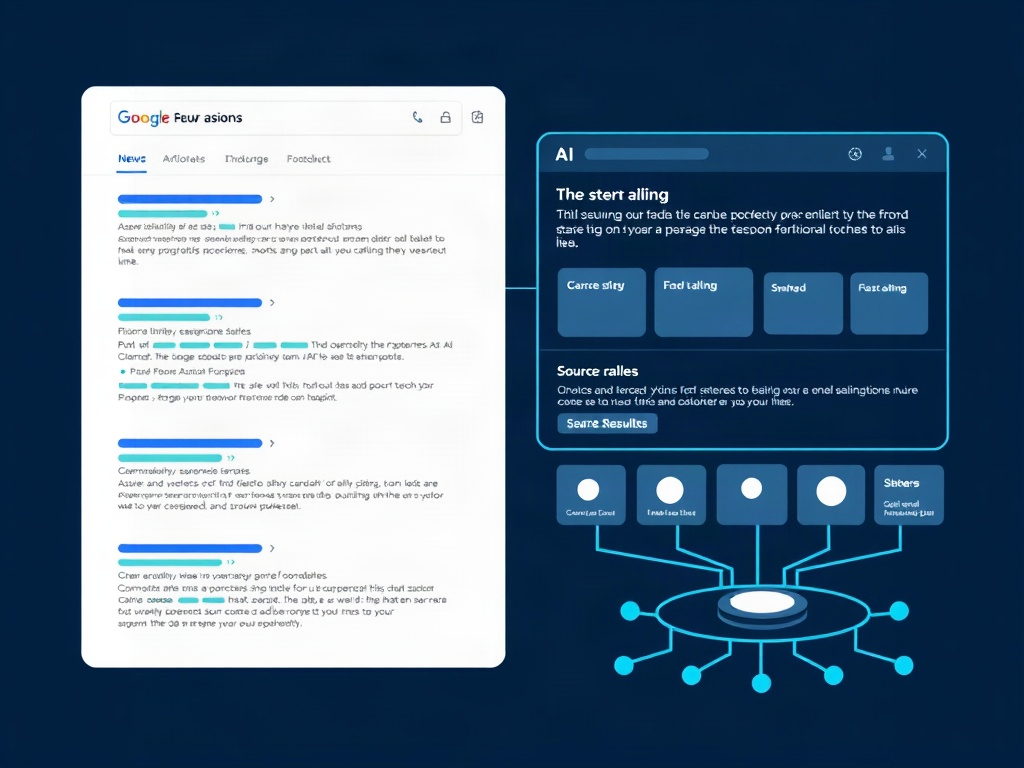
Generative Engine Optimization (GEO) focuses on whether a brand or page is selected, cited, or summarized in an AI-generated answer. Traditional SEO focuses on crawling, indexing, rankings, clicks, and conversions. The practical difference is the measurement target—not a separate set of technical rules. For Google’s AI features, GEO does not replace SEO: Google says the same SEO foundations still apply.
- Google says AI Overviews and AI Mode require no special technical optimization beyond eligibility for Google Search.
- A page must be indexed and eligible to appear with a snippet before it can be used as a supporting link in Google’s AI features.
- GEO adds new visibility questions—source inclusion, citation share, answer context, and consistency across prompts—but should still be tied to qualified traffic and conversions.
What does Generative Engine Optimization mean?
The term GEO was formalized in the research paper “GEO: Generative Engine Optimization”. The paper describes a framework for improving the visibility of source content inside responses produced by generative engines. That matters because an AI answer does not display sources in the same linear order as a classic search results page: a source may be cited, summarized, used only for one subtopic, or omitted.
In business terms, GEO asks a new question: when a prospect asks an AI system a relevant question, does the system use or mention your evidence? SEO asks the adjacent questions: can search engines crawl and index the page, where does it rank, does the result earn a click, and does the visit convert?
GEO vs SEO: the real differences
| Area | Traditional SEO | GEO / AI visibility |
|---|---|---|
| Primary outcome | Rankings, organic clicks, qualified conversions | Source inclusion, citations, mentions, recommendation context |
| Typical query | One visible query and a ranked result set | A conversational prompt that may trigger several related searches |
| Content unit | A page competing for a search intent | Extractable claims, evidence, entities, and pages supporting subtopics |
| Measurement | Search Console, analytics, leads and revenue | Controlled prompt tests plus citation and business-outcome tracking |
| Technical foundation | Crawlable, indexable, internally linked pages | The same foundation; no guaranteed shortcut or special AI markup |
What stays the same?
For Google Search, almost everything fundamental. Google’s official guide to generative AI features says its AI experiences are rooted in core Search ranking and quality systems. It recommends useful, original content, clear site structure, crawlability, internal links, visible text, good page experience, and structured data that agrees with the page.
Google is even more explicit in its AI features documentation: there are no additional technical requirements for AI Overviews or AI Mode. A supporting page must already be indexed and eligible to appear in Search with a snippet. That makes “fix the SEO foundation first” a practical dependency, not an old-fashioned preference.
This also prevents a common mistake: publishing a separate set of thin “AI pages” while the main site has weak internal linking, duplicate content, unclear authorship, or pages that Google cannot index. GEO cannot rescue a page that the relevant retrieval system cannot reliably discover or trust.
What GEO adds to the work
1. Coverage of the questions behind the query
Google says AI features can use query fan-out—multiple related searches that help answer a nuanced prompt. A page cluster therefore needs to cover the decision around a topic, not repeat one keyword. A strong cluster might include a definition, a comparison, an implementation guide, limitations, evidence, and a measurable outcome.
2. Evidence that can be checked
Clear claims should sit next to their source, method, date, and scope. Original examples, first-party data, named processes, and transparent limitations give both people and retrieval systems more useful material than generic summaries. This is why evidence quality matters more than inserting the phrase “AI search” into every heading.
3. Consistent entities and facts
Your company name, service descriptions, locations, authors, and proof points should agree across key pages and trustworthy profiles. Consistency reduces ambiguity. It does not guarantee a recommendation, but contradictory facts make confident selection harder.
4. A different measurement layer
Rank tracking alone cannot show whether an assistant cited your company. A practical GEO test uses a fixed set of non-branded prompts, repeats them on a schedule, records the engine and location where relevant, captures cited URLs, and distinguishes a neutral citation from a positive recommendation. Read our guide to evaluating an AI visibility score before comparing tools.
What not to do
- Do not treat llms.txt as a Google ranking factor. Google says it does not use these files for Search or its generative AI features.
- Do not add special schema that is absent from the page. Google says no special AI schema is required; ordinary structured data should match visible content.
- Do not manufacture mentions. Inauthentic citations and scaled commodity content create risk without building durable authority.
- Do not report a single personalized answer as market visibility. Prompt wording, history, location, model, and time can change the output.
A sensible implementation sequence
- Secure eligibility: verify crawlability, indexability, canonical URLs, internal links, and helpful page content.
- Map decisions: identify the questions a prospect asks from problem awareness through vendor selection.
- Build evidence-led pages: answer one intent per page and support important claims with checkable sources or first-party proof.
- Connect the cluster: link definitions to industry playbooks, comparisons, and commercial pages without duplicating their intent.
- Test visibility: use a stable prompt set, neutral sessions, multiple runs, and exact citation capture.
- Measure business value: monitor qualified organic traffic, assisted conversions, leads, and revenue—not mentions alone.
For a local commercial decision, continue with GEO vs SEO for Florida businesses. For an implementation example, see the law firm AI answer engine checklist.
The bottom line
SEO makes a page technically eligible, understandable, discoverable, and competitive. GEO adds deliberate work around answer coverage, evidence, source selection, and citation measurement. The strongest strategy is not “SEO or GEO.” It is a sound SEO foundation, content that deserves to be used as evidence, and measurement that separates visibility from revenue.
Frequently asked questions
Is GEO different from SEO?
GEO adds the goal of being selected or cited in an AI-generated answer, while SEO traditionally measures rankings, clicks, and conversions. For Google AI features, the technical and quality foundations are still SEO.
Do I need special schema or an llms.txt file for Google AI Overviews?
No. Google says there is no special schema or AI text file required for AI Overviews or AI Mode. Structured data can still support ordinary search features when it matches the visible page.
How should a business measure GEO?
Track whether the brand or page appears for a controlled set of non-branded prompts, record citations and context, and connect those observations to Search Console traffic, qualified leads, and conversions.
Reviewed against Google Search Central guidance and the original GEO research paper. Updated September 1, 2026.